




SIGNS IT’S TIME TO REPLACE YOUR MATTRESS
Think about the last time you upgraded your phone. You probably noticed it getting slower, the battery draining faster, the screen not quite as sharp. So you replaced it. It made sense, it was affecting your daily life.
Now think about your mattress.
Most of us sleep on the same bed for ten, twelve, sometimes fifteen years without a second thought. We assume that as long as it looks fine and doesn’t squeak, it’s doing its job. But a mattress doesn’t fail dramatically. It fails quietly – a little less support here, a little more sagging there, until one day your body has been absorbing the consequences for years without you realised it.
In Singapore, this happens faster than most people expect. The heat, the humidity, and the nightly switch to air-conditioning create conditions that age a standard mattress well ahead of schedule. The signs are already there. You just need to know what to look for.
THE MORNING BACK PAIN TEST
Here’s a simple question: how does your back feel when you first wake up?
A little stiffness after a night of sleep is one thing. But if you wake up most mornings with a dull ache in your lower back, and it fades away after a warm shower or twenty minutes of moving around, that pattern is telling you something important.
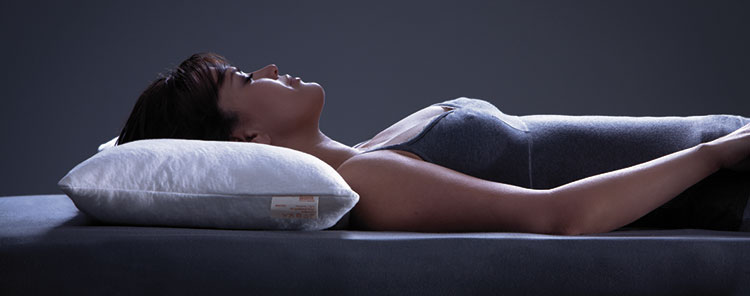
When a mattress is supporting correctly, it holds your spine in a natural, relaxed position throughout the night. Your muscles get to fully let go. Your lower back decompresses after a long day of sitting or standing. You wake up feeling lighter than when you went to bed.
When a mattress has lost its support, the opposite happens. You may not be able to know by looking at it, but if your hips sink too deep or your lower back curve in the wrong direction, it is time to start paying attention. Your muscles don’t fully relax because they’re quietly working all night to compensate. By morning, they’re tired.
That hour or so of morning stiffness isn’t just grogginess. It’s your body telling you it spent the night in the wrong position.
If this sounds familiar, it’s worth paying attention. The problem isn’t your age or your desk job alone. It may simply be what’s underneath you while you sleep.
HOW SINGAPORE’S CLIMATE AGES YOUR BED
Singapore’s weather is beautiful, but it is genuinely harsh on mattress materials. The combination of year-round heat and high humidity puts a level of stress on synthetic beds that most people don’t account for.
| TRADITIONAL POCKET SPRING | How It Fails Steel coils weaken and sag over 7–10 years |
Humidity Response Hollow spring cavities trap moisture and dust |
Sleep Temperature Moderate |
Allergen Risk High – spring cavities traps dust mites |
Lifespan in Tropics Shorter than expected |
| SYNTHETIC MEMORY FOAM | How It Fails Foam permanently sinks with heat and body weight |
Humidity Response Dense foam absorbs heat and humidity over time |
Sleep Temperature Traps body heat; creates a warm, clammy surface |
Allergen Risk High – degrading foam sheds microplastic particles |
Lifespan in Tropics Often 5 to 8 years before noticeable collapse |
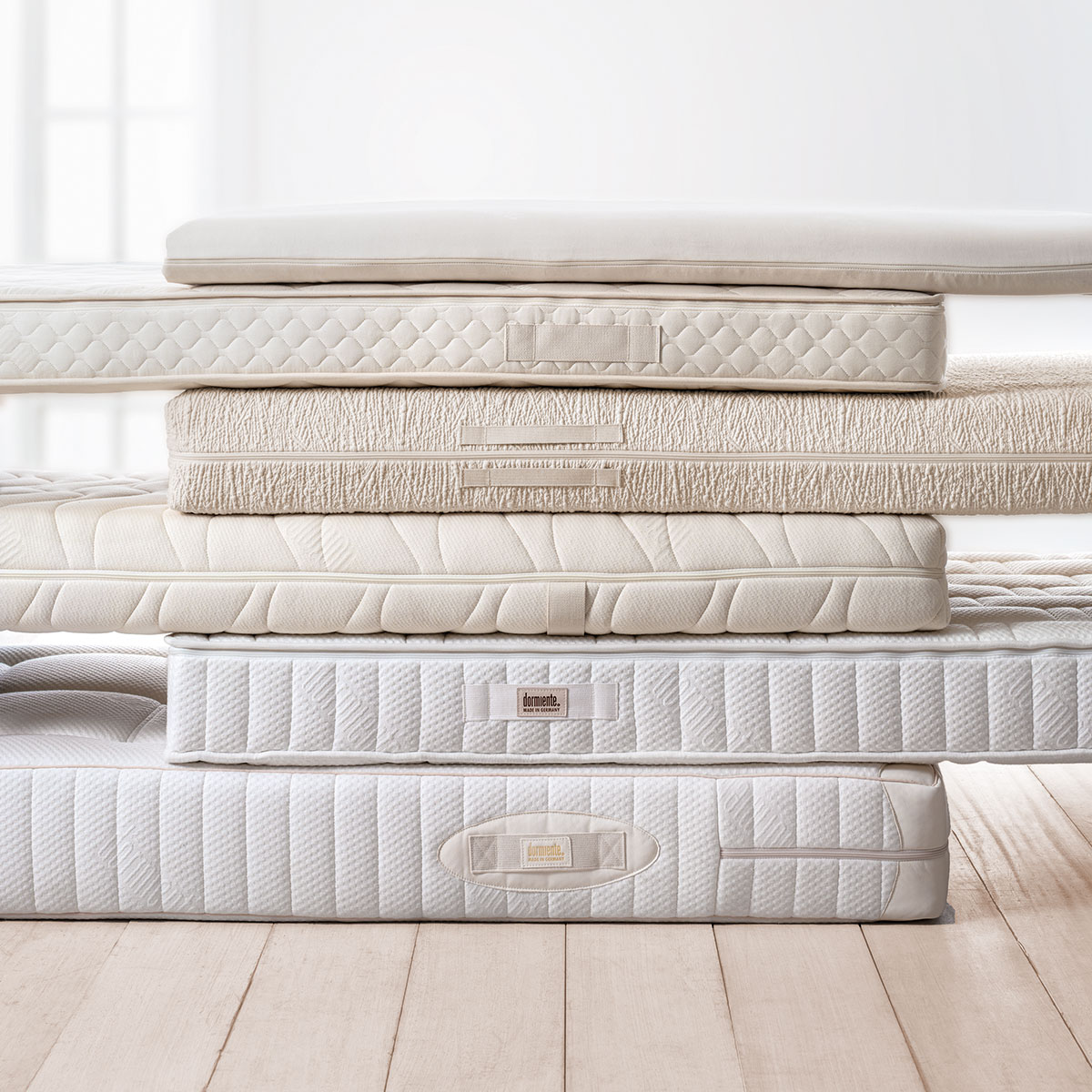
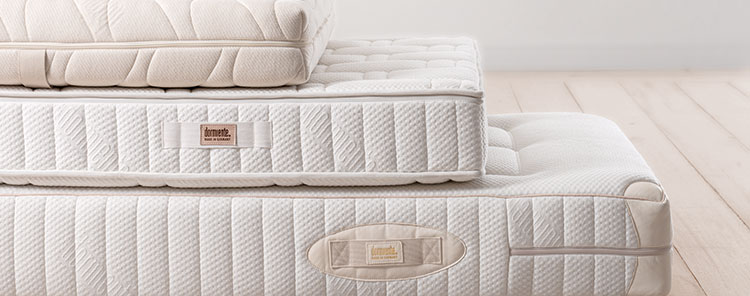
| DORMIENTE 100% ORGANIC NATURAL LATEX | How It Fails Pure plant latex maintains its shape and push-back for decades |
Humidity Response Open-cell structure breathes and stays naturally dry |
Sleep Temperature Naturally self-ventilating and cool |
Allergen Risk Low – naturally mild dew and mould resistant without needing chemical treatments |
Lifespan in Tropics More than 10 years without sagging or breakdown |
Memory foam, which is commonly found in many bedrooms in Singapore, is a petroleum-based material. Designed for cooler climates, the synthetic foam softens more aggressively over time In Singapore’s heat and humidity. The cells that were designed to bounce back gradually collapse under the heat of your body. Over a few years, a permanent dip forms, a slow sinking that mirrors your sleeping shape. Once that happens, the mattress is locking your body into poor posture every single night, without any visible sign that something has gone wrong.
Pocket spring mattress have their own problems. The hollow spaces between the coils might seem harmless, but in Singapore’s humid climate, they become a quiet collection point for moisture. And where there’s warmth and moisture, dust mites follow.
Organic natural latex behaves differently. Because it comes from a plant source rather than a petroleum one, its molecular structure is fundamentally more resilient. It doesn’t rely on heat to soften and shape. It simply pushes back, gently and evenly, under whatever weight is placed on it. Year after year, it returns to its original form.
THE HIDDEN AIR-CON TRAP
Most of us in Singapore sleep with the air-conditioning on. It makes perfect sense, the nights are warm, and a cool room helps the body settle into deeper sleep. But there’s a side effect that almost nobody talks about.
Every day in Singapore, your bedroom goes through a significant temperature shift. The room heats up during the day, sometimes reaching well above 30 degrees. Then at night, the air-con brings it back down. This daily cycle causes tiny amounts of moisture to settle and condense inside your mattress, especially inside the hollow cavities of a spring mattress, or deep within the dense layers of a synthetic foam.
Over months and years, this moisture has nowhere to go. It builds up quietly inside the mattress, creating exactly the warm, damp environment that dust mites need to breed.
Dust mites are invisible. You’ll never see them. But the signs of their presence are familiar to many Singaporeans: waking up with a slightly stuffy nose, eyes that feel a little irritated, or skin that feels mildly itchy in the morning. These symptoms are so common here that most people simply chalk them up to Singapore’s weather or seasonal allergies.
Sometimes that’s true. But if the symptoms are consistent, appearing most mornings and easing after a while, your mattress may be the source.
A mattress made from 100% organic natural latex doesn’t create this problem. Its open-cell structure allows air to move through it freely, so moisture doesn’t get trapped inside. It also has a natural resistance to dust mites, without the need for any chemical treatments. The sleeping environment stays genuinely clean, night after night.
THE PARTNER DISTURBANCE
If you share your bed, there’s one more sign worth paying attention to: how aware are you of your partner’s movements during the night?
On a new, well-structured mattress, movement on one side of the bed stays on that side. The material absorbs the motion and keeps it local. You might vaguely sense your partner shifting, but it doesn’t pull you out of sleep.
On an aging mattress, this changes. As the comfort layers break down and the surface loses its structure, movement travels across the bed much more easily. Your partner turns over at 3am, and you feel it. They get up to get a glass of water, and the whole surface shifts. You wake up, maybe fully, maybe just enough to break a sleep cycle, and neither of you is aware it happened.
Over time, this quiet disruption adds up. Neither of you sleeps as deeply as you could. Both of you wake up feeling slightly less rested than you should. And because it happens gradually, it’s easy to assume it’s just stress or a busy schedule rather than the bed itself.
A mattress that has maintained its structure doesn’t do this. The material responds to each person independently, so movement stays contained and the person sleeping next to you stays undisturbed.
INVESTING IN A PURE, FRESH START
Replacing a mattress can feel like a big decision. But looked at clearly, it’s one of the most straightforward investments in your daily health you can make.
You spend roughly a third of your life on your mattress. It affects how your back feels, how deeply you breathe, how rested you wake up, and how well your body recovers from everything the day asked of it. When the surface you’re sleeping on is no longer doing its job – when it’s sagging, trapping moisture, disturbing your partner, or quietly building up allergens, no amount of good habits during the day can fully make up for what’s happening at night.
A mattress made from 100% certified organic natural latex doesn’t just avoid these problems. It actively works with your body by staying cool, supporting your spine, breathing with the air around it, and holding its shape for decades rather than years.
If any of the signs felt familiar, it may be time to pay your mattress a little more attention. A good place to start is to visit dormiente showroom for a sleep consultation. Come and feel what a genuinely supportive mattress, and pure toxic free sleep feels like. Sleep better to live healthier.